US$ 995Get OfferInquire

Encounter Himalayas & Wildlife Tour

Country
Nepal

Duration
10 Days

Maximum altitude
3,800 meters (12,467 feet)

Activity
Trekking

Difficulty
Easy

Best Season
Autumn and Spring (September - May)

Accomodation
Hotel - Mountain Lode

Meals
Excluded

Start/End Point
Nepal

Tour Overview

Tour Overview

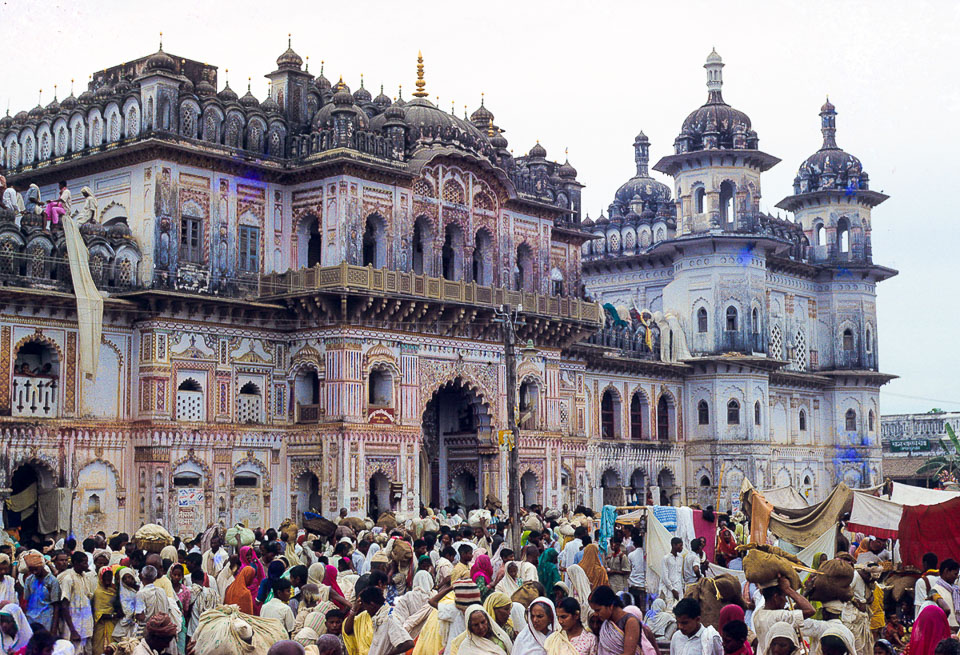
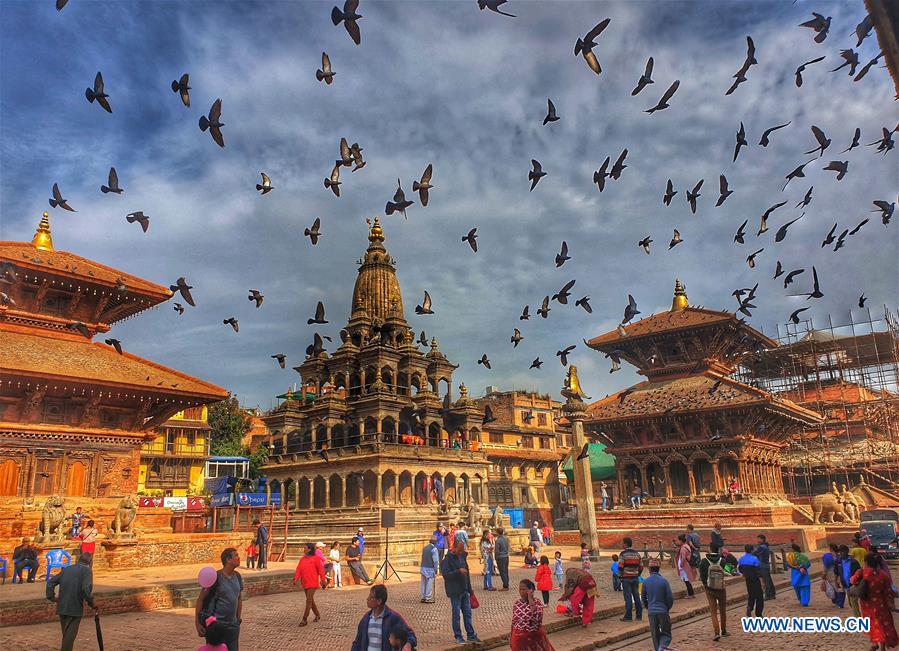
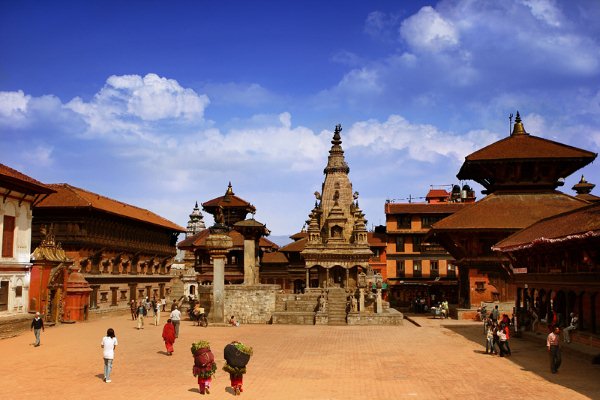
Encounter Himalayas Wildlife Tour offers the highlight tourism destinations of Nepal, combining nature, culture, and wildlife activities in Nepal. The Kathmandu Valley has always been a topic of discussion for tourists to visit before and after, due to visit since its magnificent art and architecture. In this tour, along with cultural richness. The Kathmandu Valley, including  Kathmandu, Patan, Bhaktapur, and Kirtipur, has today appeared as independent modern cities. The valley has an approximate population of 2.7million. You will enjoy visiting world heritage sites in the valley.

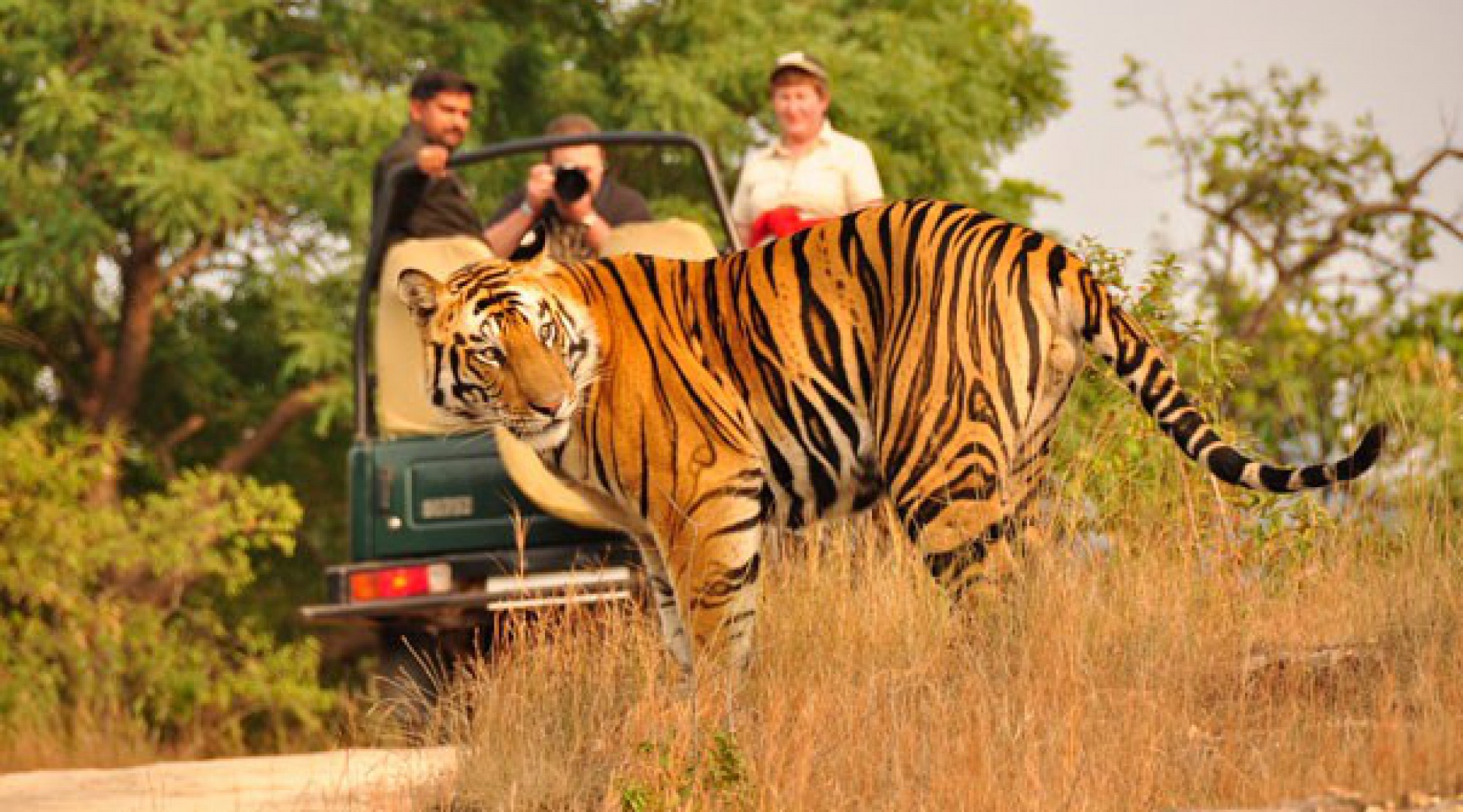
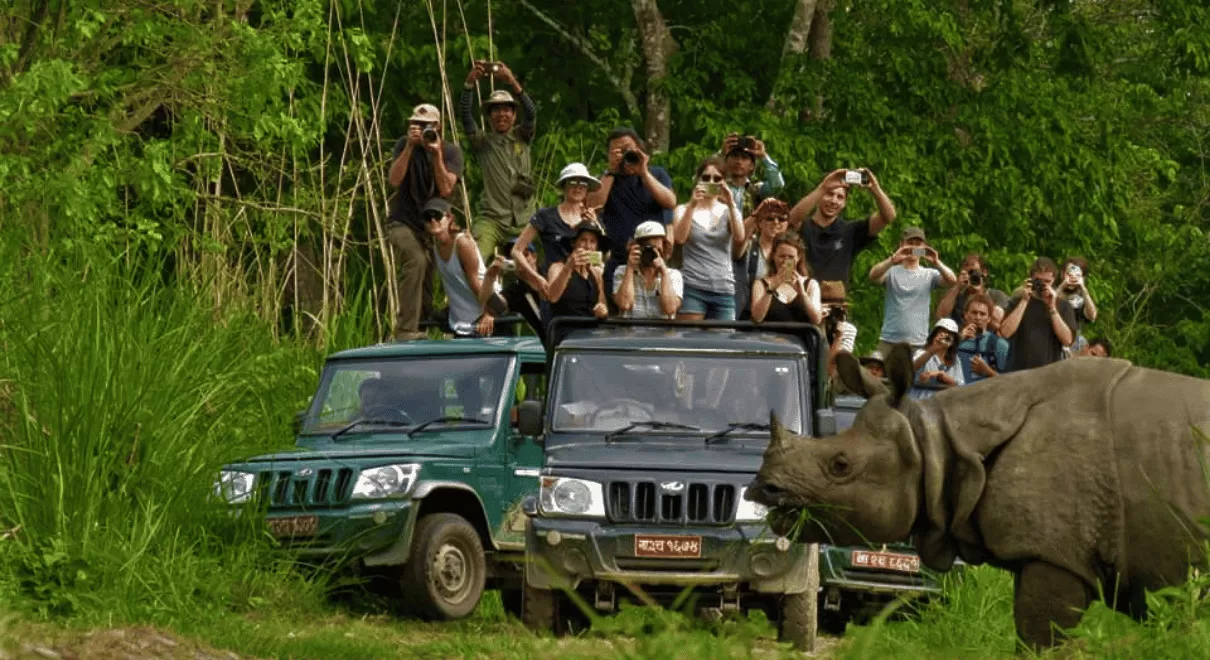
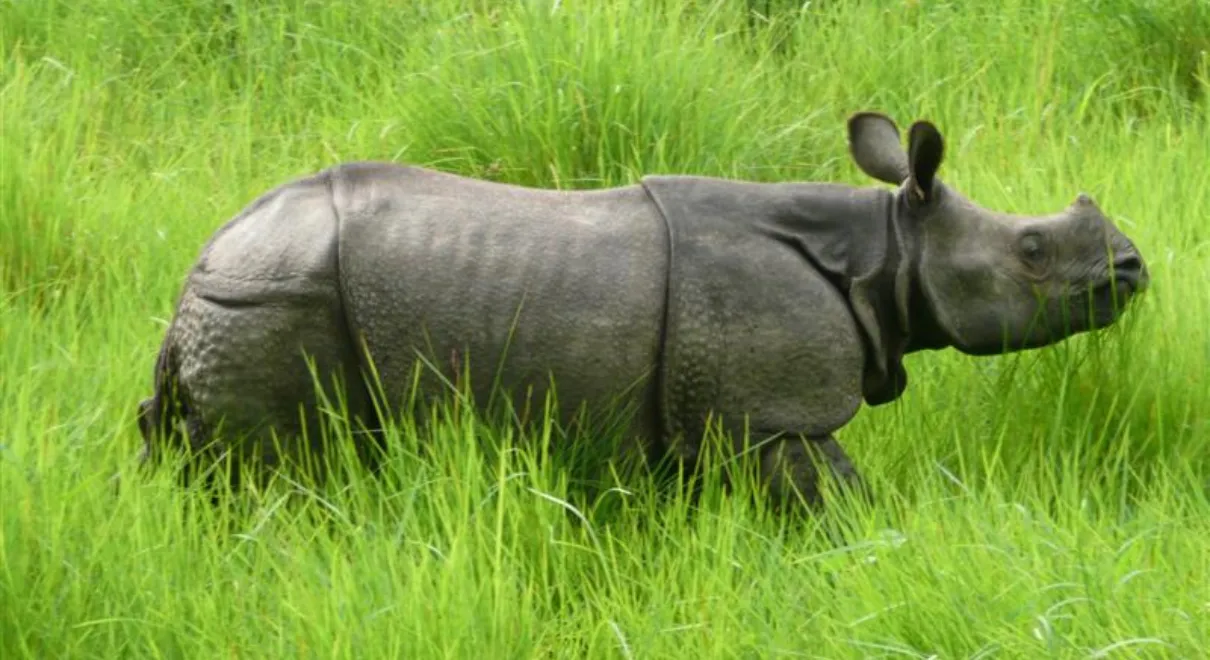
 Encounter Himalayas Wildlife Tour: Drive from Kathmandu to Chitwan National Park for wildlife activities. The Chitwan National Park is the first national park of Nepal, established in 1973. It is a World Heritage Site at the foot of the Himalayas. Chitwan is one of the few remaining undisturbed vestiges of the Tarai region, which formerly extended over the foothills of India and Nepal. The highlights of this Chitwan National Park are the 500 Asian one-horned rhinoceros and some hundred nocturnal Royal Bengal tigers that live in the dense forests of the park.

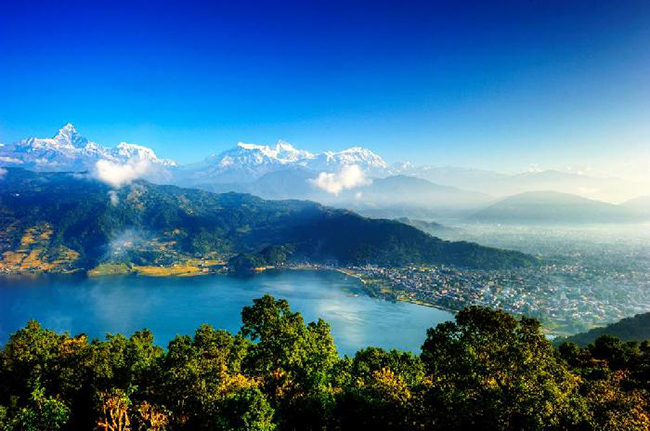
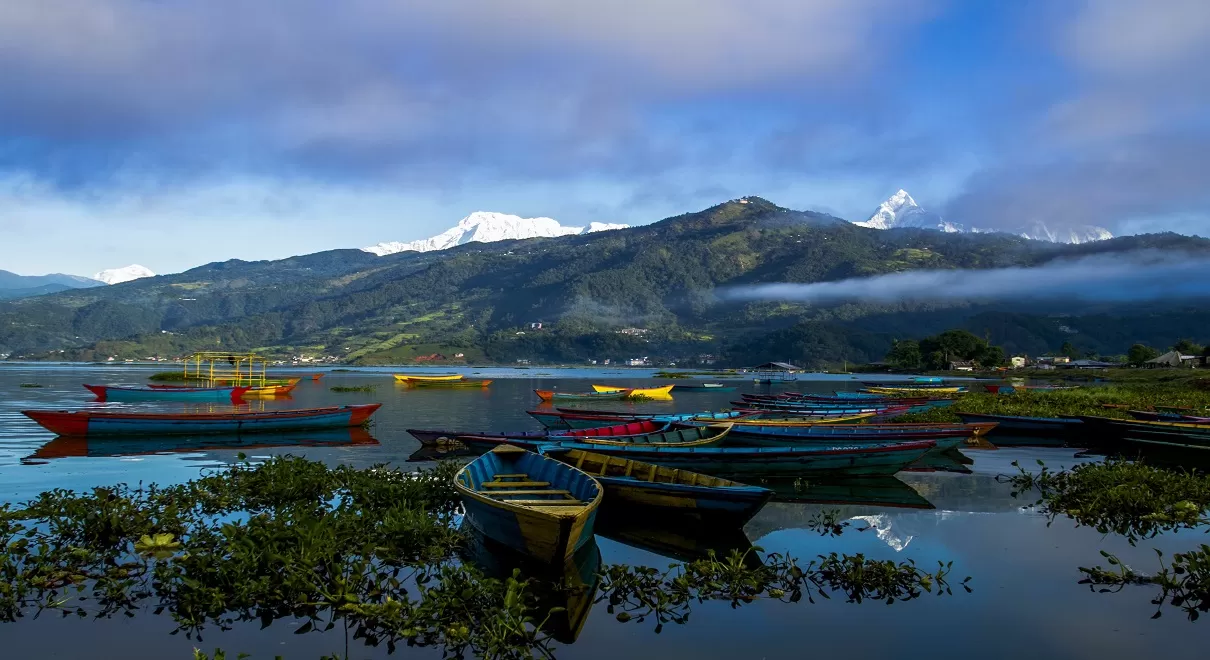
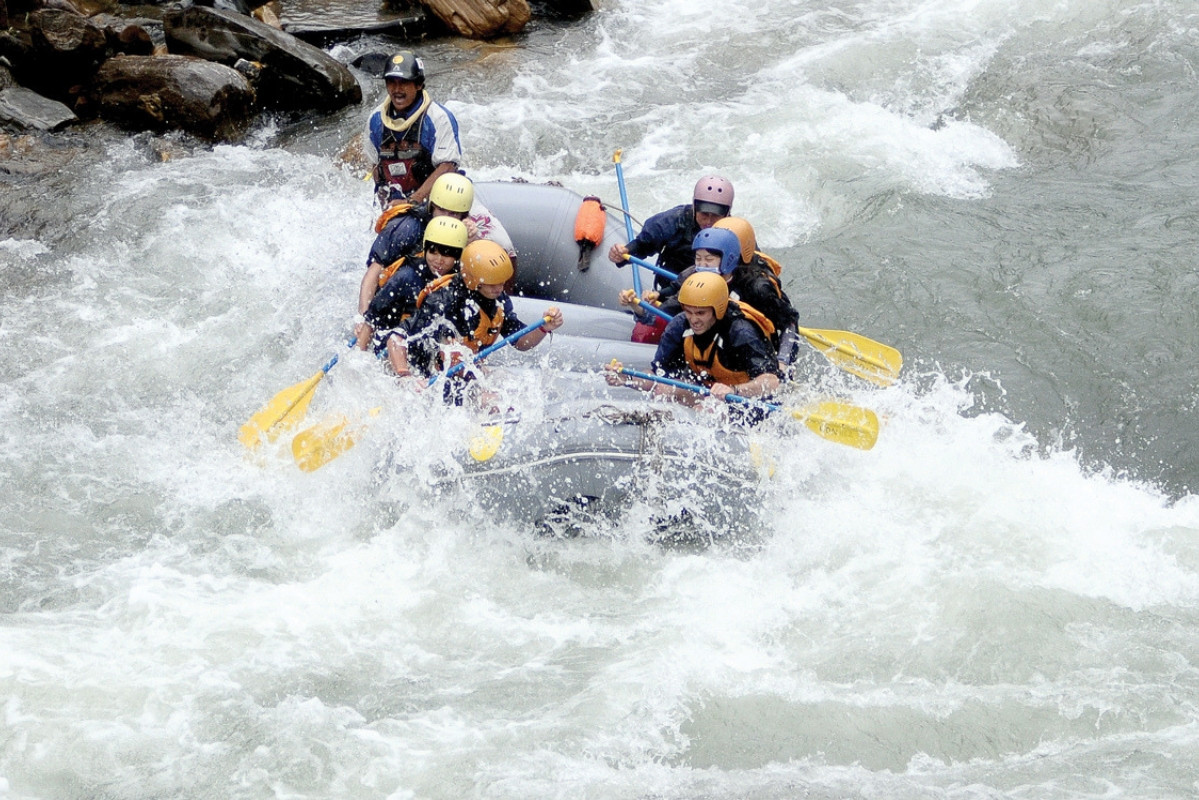
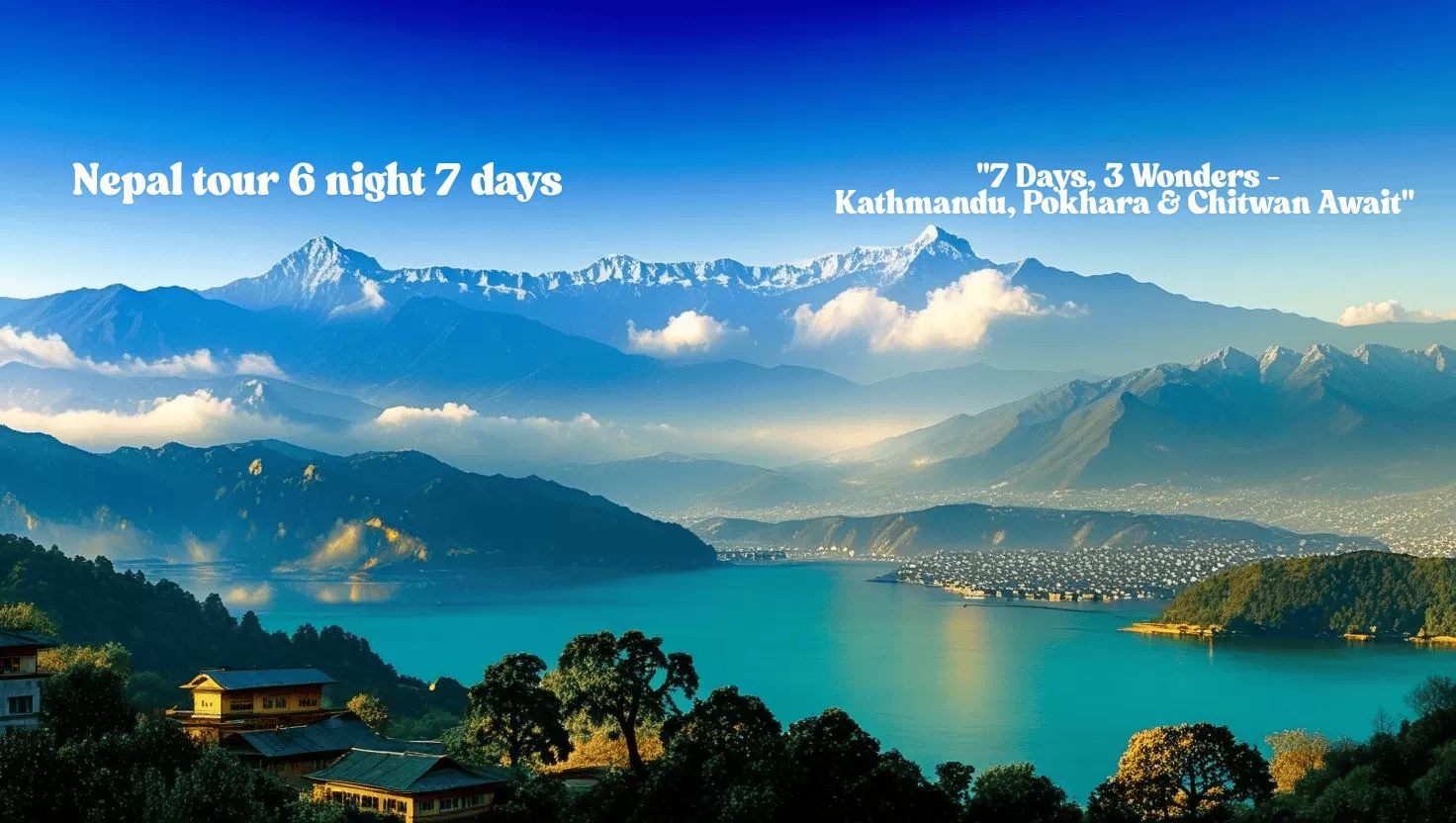
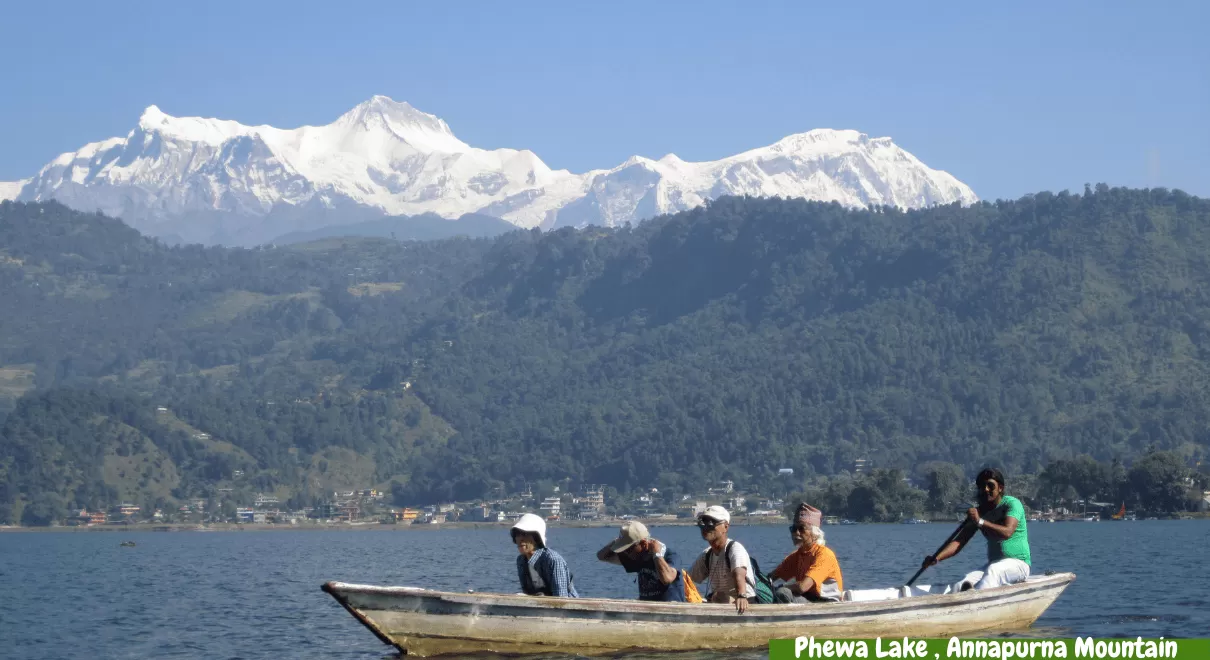
Encounter Himalayas & Wildlife Tour escorts you from Chitwan to Pokhara, an enchanting city situated in the tranquil valley (827m), which is the starting point for many of Nepal’s most popular trekking and rafting destinations. The serenity of Phewa Lake and the magnificence of the fish-tail summit of Mt. Machhapuchare (6977m) rising behind it create an ambiance of peace and magic.

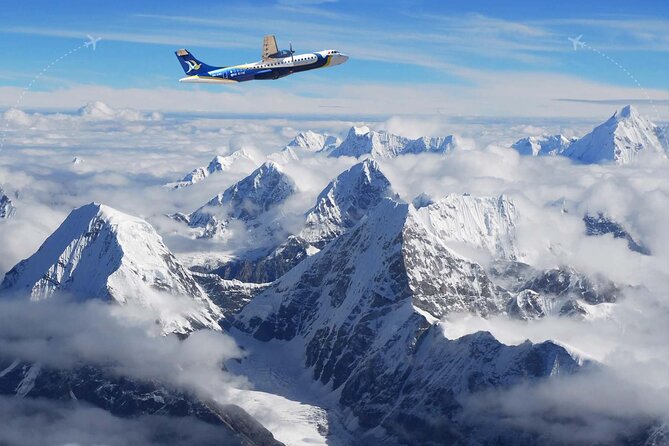
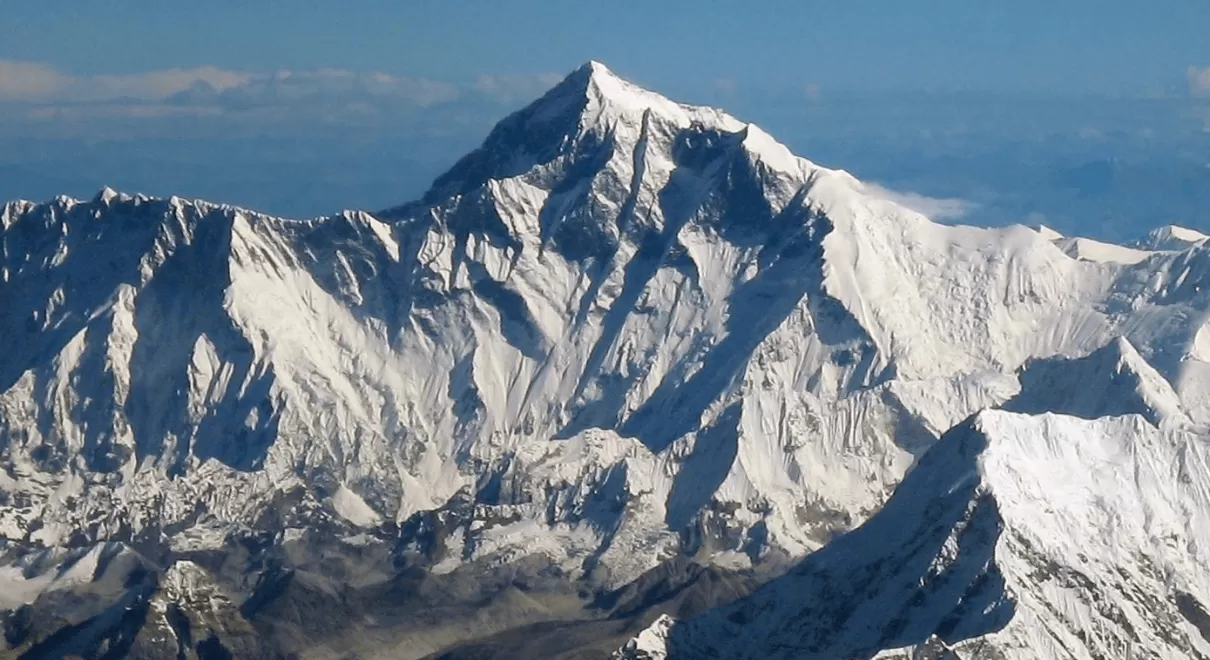
Encounter Himalayas  Wildlife Tour. Another exciting destination is Jomsom Muktinath trekking. On the trek, you will experience an amazing arid landscape with astonishing Himalayas in Jomsom. Although the flying distance is short and flight time just 20 minutes, very high mountains between Pokhara and Jomsom require planes to fly through the Kali Gandaki River gorge with major peaks that include Dhaulagiri (8,167 m or 26,795 ft) and Tukuche (6,920 m or 22,703 ft) on the west and Nilgiri Central (6,940 m or 22,769 ft) and Annapurna (8,091 m or 26,545 ft) on the east. Also, it is worth visiting Muktinath Temple. The Pilgrimage center of Muktinath has shrines sacred to both Hindus and Buddhists. The Himalayan Smile Treks can organize an Encounter Himalayas Wildlife Tour with a flexible itinerary and reasonable price according to your interest.

Tour Highlights

Tour Highlights

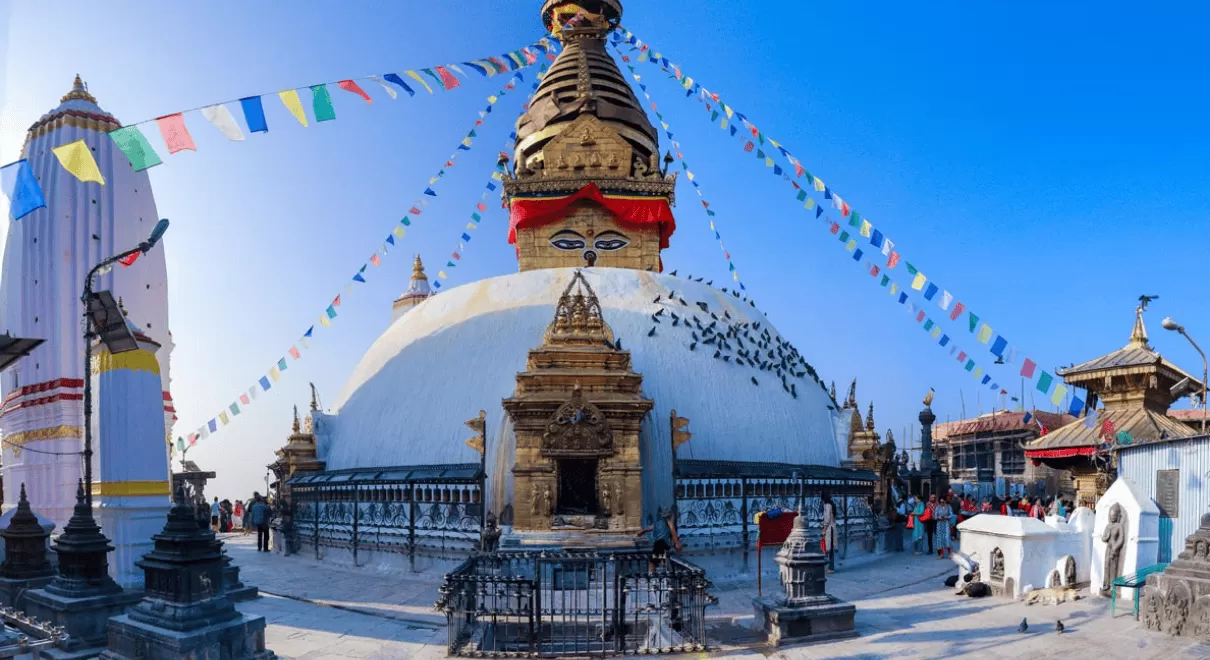
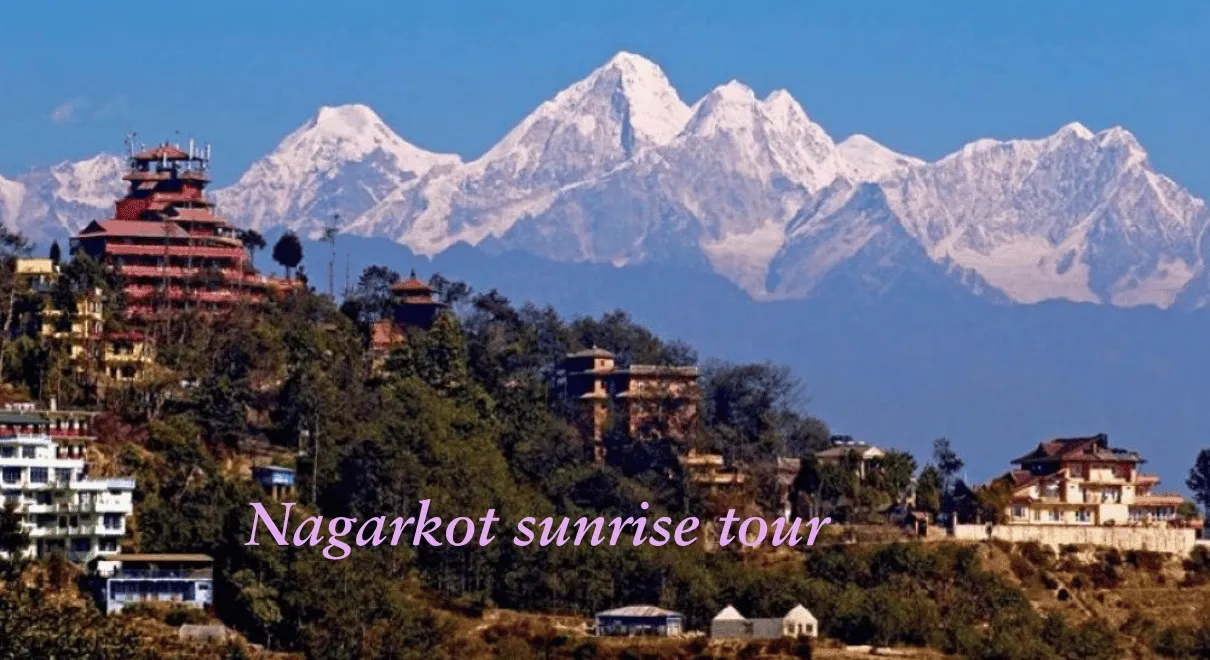
Visit Swayambhunath, the famous Monkey Temple, up on the hill. From there you can spot a lot of Kathmandu.

Then go to Pashupatinath, an important Hindu shrine. Sit near the Bagmati River and watch the evening prayer rituals.

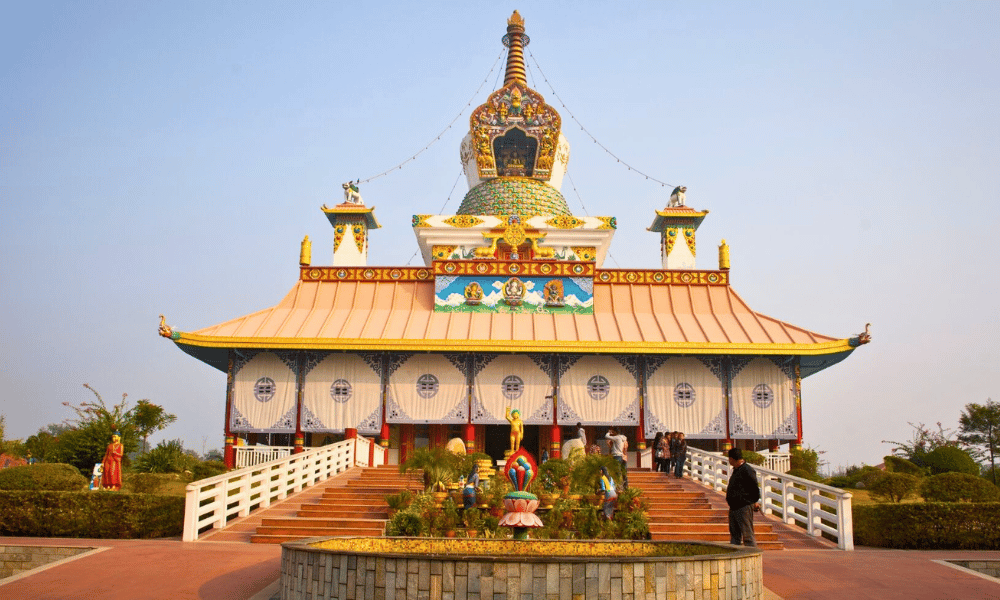
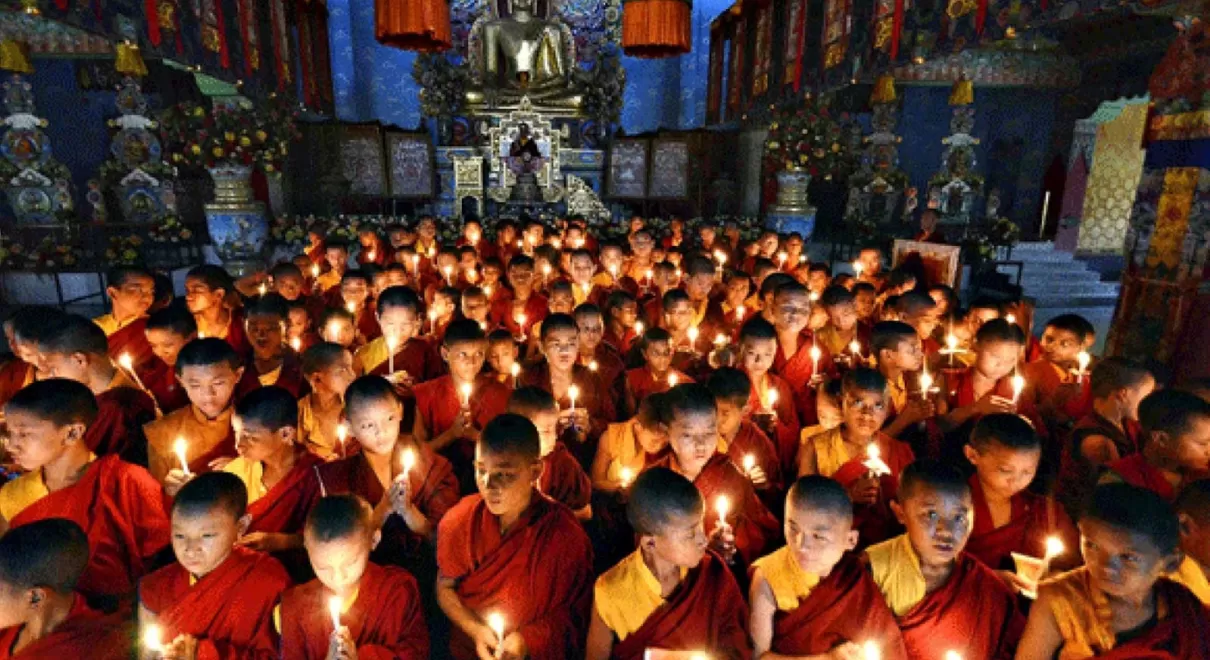
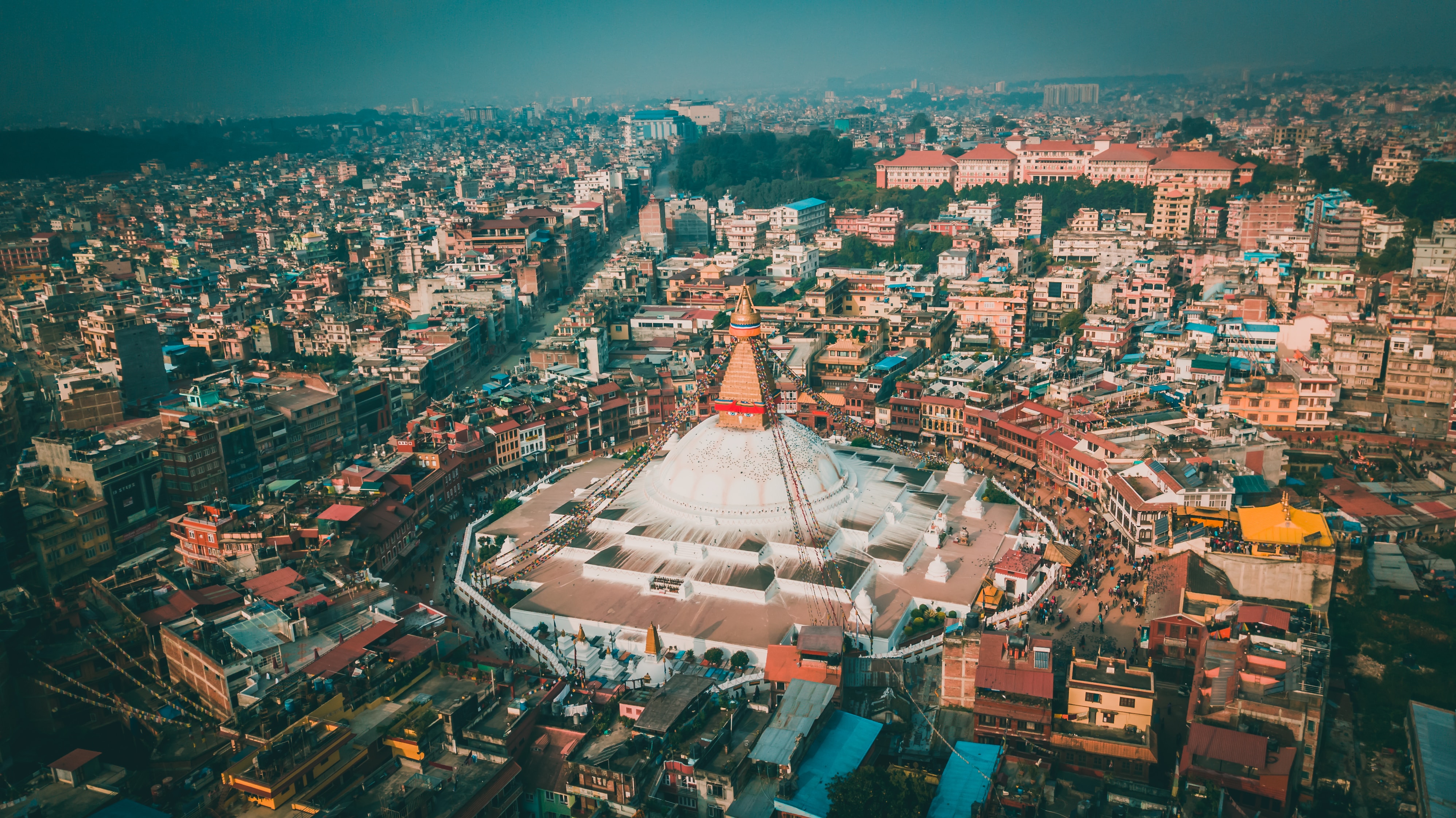
Next, walk to Boudhanath. One of the world’s largest Buddhist stupas is there. The stupa sits on a strong eight-sided base.

Stay in the Boudhanath area for a while. You will see daily Tibetan life. Check out nearby monasteries, turn the prayer wheels, look through small craft shops, and eat local dishes.

After that, head to Chitwan for a jungle outing. Take short walks in the area. Try canoeing on the water. Keep an eye out for birds. Watch Tharu stick dances. Also see elephants bathing.

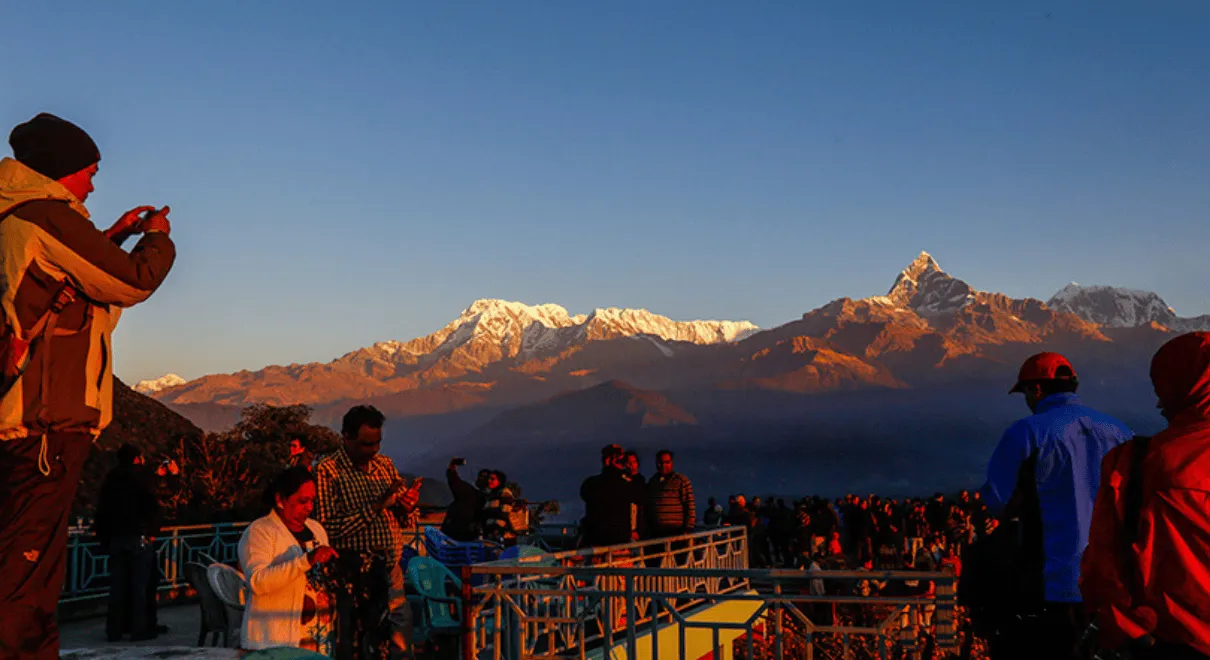
Continue to Pokhara. This place is known for its lakes. You can also catch views of tall snow-covered mountains far away.

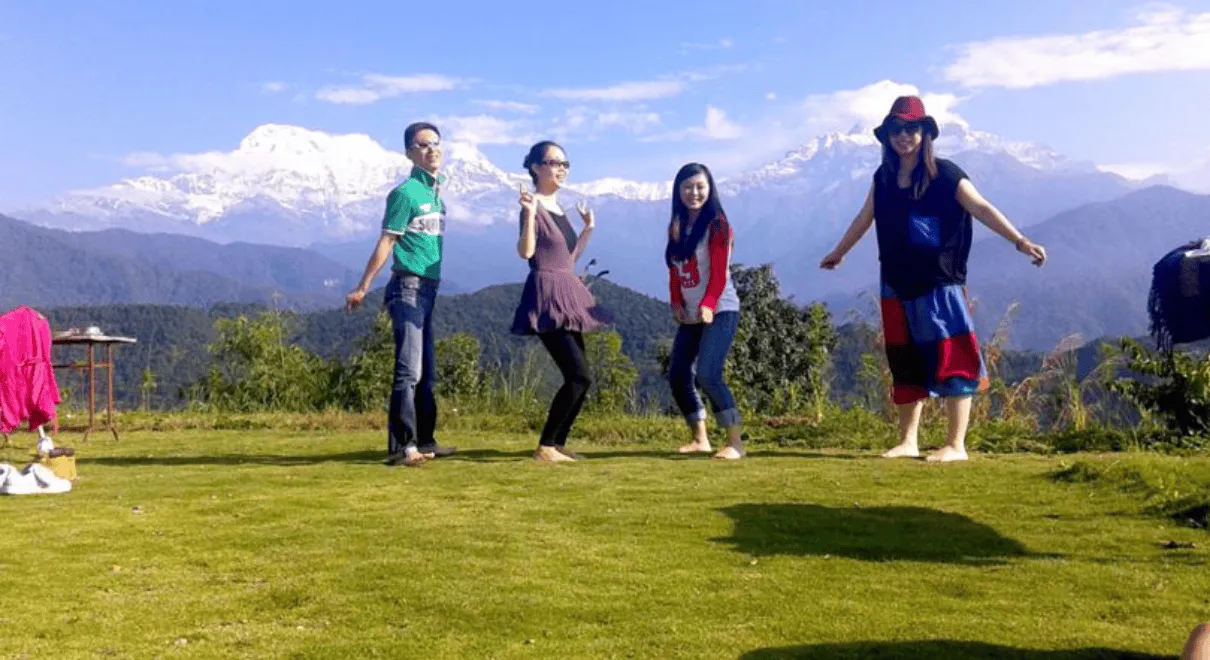
From Jomsom, look at the rugged mountain scenery. You will be close to Mt. Nilgiri. You can also view the Annapurna range.

In Marpha, spend some time with the kind Thakali people. Learn how they live. You can also see apple orchards around town.

Package Price

Package Price

Price Table

Travelers 1
Standard USD 995

  • Airport pick and drop by private vehicle
  • Two night accommodation in Kathmandu with breakfast at three star hotel
  • Two night accommodation in Chitwan with breakfast, lunch and dinner
  • Two night accommodation in Pokhara with breakfast at three star hotel
  • One night accommodation in Jomsom with breakfast, lunch and dinner at mountain lodge
  • Sightseeing to Kathmandu valley and Pokhara as mentioned in itinerary
  • Jungle activities in Chitwan National Park (Elephant safari, jungle walk, canoeing, bird watching, village walk, ethnic cultural show)
  • English speaking license holder guide
  • Entrance fees of sightseeing spots
  • Kathmandu- Chitwan- Pokhara  drive by private vehicle
  • Pokhara-Jomsom-Pokhara air fare with airport tax
  • Pokhara-Kathmandu drive by tourist coach
  • Annapurna Conservation fees at Jomsom
  • One porter for Jomsom and Marpha if necessary
  • All additional government tax
  • Farewell dinner at Nepali Restaurant with cultural show

  • Nepal entry visa fee (USD 25 for 15 days/ USD 40 for 30 days from date of issue) (You may easily get Nepal visa upon your arrival at Tribhuvan International Airport, Kathmandu)
  • International air fare
  • Travelers insurance
  • All kind of drinks (Alcohol, hot and cold drinks)
  • Lunch and dinner in Kathmandu (Approx 10-12 USD)
  • Bar bills, telephone bills and other personal expenses (shopping/ laundry)
  • Tips to guide and porter
  • All expenses due to unavoidable events e.g. Personal illness, strike etc.
  • Helicopter evacuation charge in case of emergency whilst trekking

Detailed Itinerary

Detailed Itinerary

Tour FAQs

FAQs
We suggest you drink Euro-guard filters water now several guest houses have this system or bring chlorine tablets to purify the normal water available in the guest houses along the way. Also, boiled filter water is available in the tea house they are using gas or electric boiler. For water ask to lodge people which might cost little during the whole period of trekking. Although mineral water is available in most places which is a better choice and there is no provision to dispose of the plastic bottles, we encourage the guests to do what they can protect the environment
We offer you an experienced tour guide. He is in charge of your overall travel packages. This is the person you should go to with all problems, concerns, and questions. He is well trained in all aspects of the tour, first aid, and emergency procedure. He is selected in terms of his professionalism.
We suggest you bring the following equipment when you come to Nepal for the tour. The list can be adjusted according to your needs, name of tour and time of your tour.
Hand sanitizing lotion Reading/writing material Camera & Binoculars Protein bars, chocolate, dried fruits, candies, and snack foods. Travel documents: passport, visa, travel insurance, air tickets Money: traveler’s cheques/cash/credit card Spare Boot Laces Sleeping Bag Lightweight Towel Toiletries Day pack to carry your personal needs during the day Torch/flashlight – headlamp style is ideal Sunscreen and lip balm Refillable water bottle – Min 1 Litre Hat Gloves – wool or fleeced Scarf Sewing Kit Wind and Waterproof Jacket & Pants Umbrella especially in summer (May to September) Comfortable trekking shoes Running shoes or sandals for evening Wool jumper / sweater / fleece. Lightweight Fleece Jacket T-Shirts 2 or 3 – Long Sleeved Pants – lightweight long trousers (jeans are unsuitable) Socks: thick wool blend and thin cotton to be worn in combination – ensure boots fit Medicine (Prescription drugs if you are taking daily, lip salve, aspirin, band-aids, anti-histamine, Imodium or similar tablets for mild cases of diarrhea) Note: If you don’t have good equipment and are not available in the home country, it can be bought or rented from trekking shops in Kathmandu, Nepal. The equipment is often top quality. Although daily rental charges are reasonable, a large deposit may be required.
Weather and climate vary as per season in Nepal.
Autumn is the most popular time to trek. During this time, the weather is clear with mild to warm days and cold nights. However, in the higher altitude, the nights drop into freezing temperature. In this season, the mountains views are clear.
It is also possible to trek during winter, from December until the end of February. Daytime temperatures will be cooler; however, the nights will often be very cold. The days are generally clear but occasional winter storms can bring snow as low as 2500m. Early October through late November is also the busiest period for trekking. But in mid-winter (January through March), trekking is more challenging in the high altitudes with semi-regular snowfall followed by more winter storms, which break the long fine periods. The mid-December to mid-February is the coldest time.
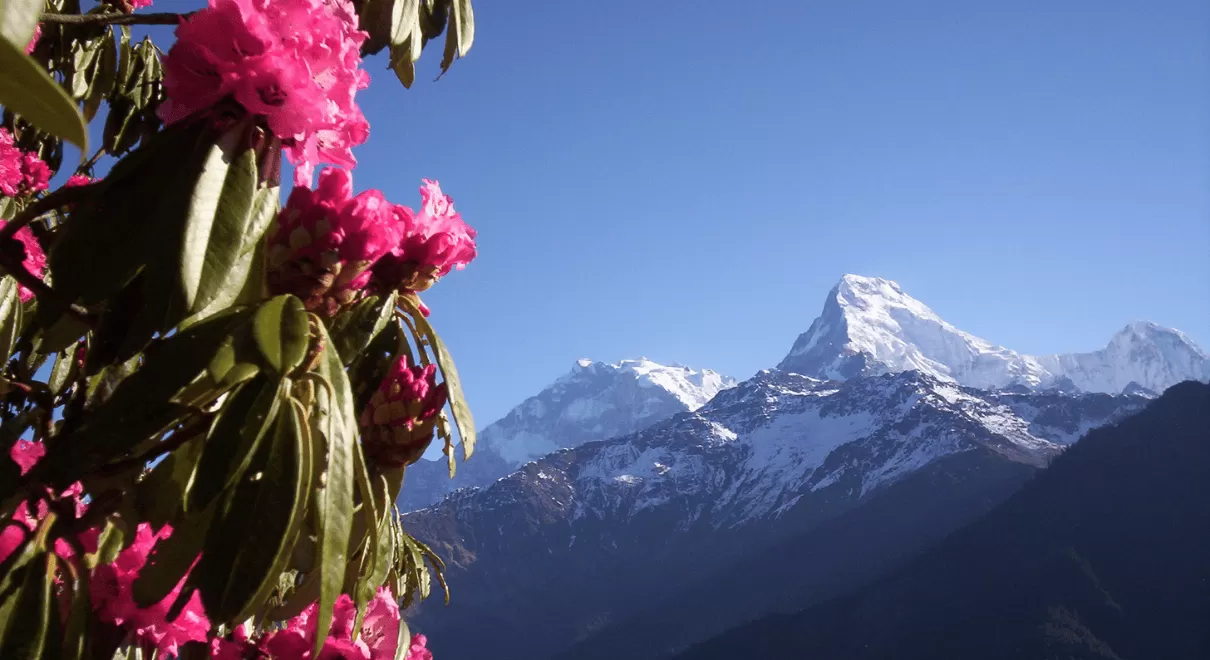
During this period the mornings are usually clear but afternoon cloud build-up brings occasional showers. The days are a mix up with warm and rain, which displays wildflowers like rhododendrons. The whole country is lush and an abundant green at this season. This period instigates the second most popular and pleasant trekking season as this is rice-planting time. Late-march into April is especially beautiful. It is also a good time for climbing as the high passes are usually snow free and the mountain views are still clear in April. Up to May, the weather becomes hazy and disturbed with the clouds.
From June to early September, is the monsoon season. Generally, the morning is cloudy and cloud wisps form on random ridges and peaks. Trekking at this time of year is generally difficult and uncomfortable as the weather is hot and it rains almost every day. The trails become muddy and are often leech-infested and the mountains are usually obscured by cloud. During April and May, there is an expectation of thunderstorm, hail shower and strong winds among the fine periods. There are, however, possibilities for summer trekking in the trans-Himalayan regions of Mustang, Dolpo, and Tibet. These regions lie in a rain-shadow and therefore receive significantly less precipitation than the more southerly areas.
You can recharge your batteries with electricity or solar power sources. In Nepal 220 – 240 volts 50 MHZ (50 Cycles per Second) power is supplied. Just need to have a plug adaptor in case of socket fitting, which you can buy in Kathmandu before the trip since the plugs in Nepal might be different. You might have to pay a small amount fee/hour for recharging facilities.
We are committed to providing the best services which will give you a once in a lifetime journey in this connection, we perform our duties honestly and seriously to make your journey very smooth and pleasant. The entire programs are conducted strictly under the rules and regulation of the country’s own policies. Himalayan Smile Trek and Adventures Pvt. Ltd shall not be responsible for any changes in the itinerary due to unavoidable circumstance such as govt. restriction, Landslide, road blockage, and flood and other natural calamities, political unrest, cancellation of flight, delay, sickness or accident. Any extra cost due to those reasons incurring there of shall be borne by the clients on the sports.
Travel insurance is compulsory in order to participate in any of our trips. When selecting a travel insurance policy we require that at a minimum you are covered for medical expenses including emergency repatriation. We strongly recommend that the policy also covers personal liability, cancellation, curtailment and loss of luggage and personal effects. Himalayan Smile Treks and Adventures Pvt. Ltd. shall have no liability for loss, theft of or damage to baggage or personal effects. We also let you know that Nepalese Insurance Company does not have a travel insurance policy for foreign nationals. They have this policy only for Nepalese national. We advise you when you come to Nepal; please bring your insurance documents.
For trekking Nepal, you don’t need to be a mountaineer with rippling muscles. If you are reasonably fit, have a spirit of mountain journey and like walking, you are always qualified for any trekking in Nepal. You do not need any previous experience. However, we suggest you some physical fitness programs such as running, swimming, hiking before you embark on the journey. We advise you to consult with your travel doctor for up to date medical travel information before departure. We recommend you to carry a First Aid kit and hand sanitizers / antibacterial wipes as well as any personal medical requirements. We advise you to carry sufficient drugs which you are taking daily for specific health problems.
All foreign nationals, except Indian citizens, need visas to enter Nepal. Nepalese visa can be obtained from Nepalese Embassy or consulate in your home country or it can also be obtained at Tribhuvan International Airport, Kathmandu upon your arrival. Most of our guests take Nepal Visa after they arrive at Tribhuvan International Airport. To get Nepalese visa you should bring a valid passport and two passport size photos. The validity and visa fee is as follows: Visa Valid Fee 15 days US$ 25 30 days US$ 40 90 days US$ 100
Best Price Offer

Start From

US$ 995 Person

Speak with a Nepal Adventure Travel Expert

Get personalised guidance for any Nepal adventure — with expert planning and safety support.

Ask Now

We offer expert advice, flexible options, and tailor-made itineraries.

Average Reviews Write a review

5 /5

Very Good

From 4 reviews

Cleanliness

5/5

Service

5/5

Facilities

5/5

Location

5/5

Value for money

5/5

Traveler Review

Traveler Review

↑