Country
Nepal
Duration
12 days
Maximum altitude
Activity
Tour
Difficulty
Leisure / Moderate
Best Season
All Year
Accomodation
Included
Meals
Included
Start/End Point

Buddhist circuit tour Nepal India. Firstly, you will observe the Kathmandu Valley, historically known as Nepal Valley or Nepa Valley, which lies at the crossroads of ancient civilizations, including seven world heritage site which is recognized by UNESCO World Heritage sites,
After Kathmandu, you will fly to Lumbini; the birthplace of Lord Gautam Buddha is one of the major sites in Nepal. Gautam Buddha was a sage and ascetic who founded the teaching of Buddhism. He was also known as Siddhartha Gautam, Shakyamuni Buddha, or simply the Buddha. Going back in history, Kapilvastu was the place where Queen Mayadevi gave birth to Siddhartha Gautam in 563 BCE. His father was King Suddhodana, the leader of the Shakya clan whose capital was Kapilvastu. This is the place where Siddhartha spent his first 29 years and traveled to other places to achieve enlightenment around 528 BCE.
Lumbini
Lumbini is known as the place where Siddhartha Gautama was born. He later became the Buddha. Because of this, many people see Lumbini as one of Buddhism’s most sacred locations.
Today the garden sits in Nepal. Tradition places the birth in 623 BCE. It was said that Queen Mayadevi gave birth there.
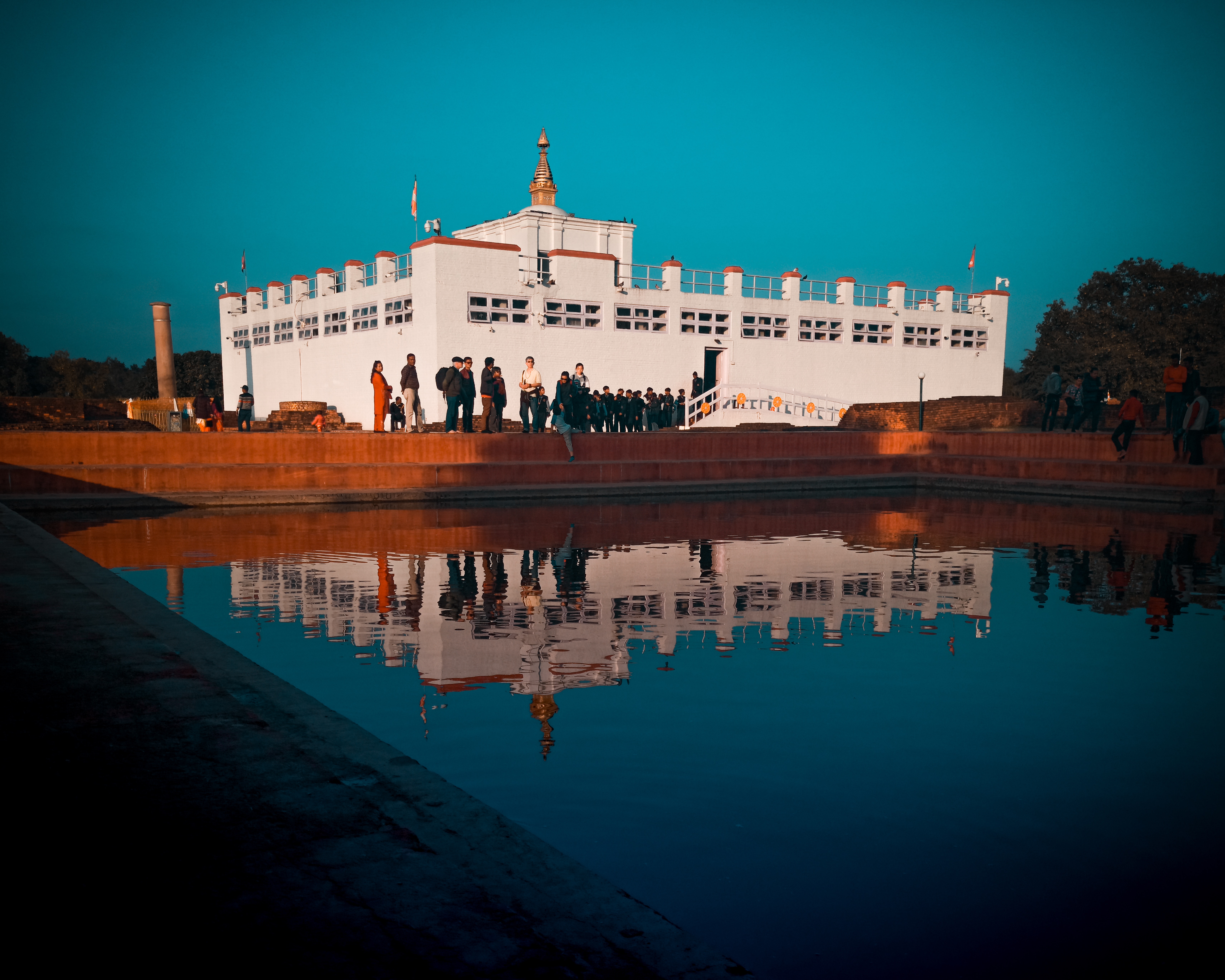
Within the grounds, visitors can find the Mayadevi Temple. It is connected with the spot of the birth. Nearby is the Puskarini pond. The pond is linked to the story of the newborn Buddha being bathed.
There is also the Ashoka Pillar. It was set up by Emperor Ashoka in 249 BCE. This marker is often used to support the site’s history.
Many monasteries from different Buddhist nations are also present. This helps make the area feel calm and spiritual. Because of its importance, Lumbini is a place of pilgrimage and a UNESCO World Heritage Site.
Bodhgaya
Bodhgaya is often called the most sacred spot in Buddhism. This is the place where Prince Siddhartha sat under the Bodhi Tree. Later, he reached enlightenment. After that, he came to be known as the Buddha. The events took place over 2,500 years ago, and they shaped Buddhist ideas in a lasting way.
Now the Mahabodhi Temple marks the area. UNESCO lists the site as a World Heritage Site. People admire the temple for its traditional architecture. Not far away, there is also a tree connected to the first Bodhi Tree.
Each year, travelers arrive from many countries. Monks and pilgrims meet and sit in silence to meditate. They also say prayers and show respect for what occurred here. The surroundings feel quiet and steady. Monasteries from different places stand nearby. For many visitors, this stop feels like a real look at spiritual life and a clear tie to Buddhist history.
Kushinagar
Kushinagar is well known for one major event in the life of Buddha. It is the place where he reached Mahaparinirvana. This was his last exit from the body. He was 80 years old at that time.
This town is in Uttar Pradesh, India. It has the Mahaparinirvana Temple. Inside, there is a large reclining figure of Buddha. The statue measures about 6.1 meters. It shows him in the position of final rest.
Near the temple area, you can also find the Ramabhar Stupa. It is linked to the cremation site. Because of this, many people feel a deep sense of respect here.
The area around Kushinagar is quiet. There are also old ruins nearby. Together, these details help visitors slow down and think. They reflect on what Buddha taught about change and lasting impermanence.
For many pilgrims, Kushinagar feels like a finished chapter. It brings together the story of Buddha’s life, his death, and what remains after him.
Varanasi
Varanasi is among the oldest towns still inhabited. It matters a lot in Buddhist stories because Sarnath is nearby, and that is where the Buddha is said to have given his first sermon after he reached enlightenment.
This city sits along the Ganges River. The river is sacred, and people come here for many reasons. Varanasi is also a well-known Hindu pilgrimage spot. You will find ghats along the steps, many temples, and a strong sense of devotion in everyday life.
When you visit, you can watch the Ganga Aarti ceremony. It is beautiful and moves slowly through the evening. You can also take a boat trip at sunrise.
If you want to see history on land, go to Sarnath. The ruins there are worth your time. One key site is the Dhamek Stupa.
Overall, Varanasi brings together Buddhist heritage and living Hindu traditions. It feels like a stop you should not skip.
Lumbini, Nepal : Go to the place said to be Lord Buddha’s birth. See the Mayadevi Temple. Visit the Ashoka Pillar. Walk through quiet monasteries that welcome visitors from many places.
Bodh Gaya, India: Sit in calm and meditate near the Bodhi Tree. This is where Siddhartha is said to have reached enlightenment. Also take time to see the Mahabodhi Temple grounds, a UNESCO site.
Sarnath, India : Visit the spot linked to Buddha’s first sermon. Look around the Dhamek Stupa. Explore nearby old remains. Stop by the archaeology museum close to the main area.
Kushinagar, India: Visit the Mahaparinirvana Temple to pay respect. This temple marks the time when Buddha is believed to have passed away. See the large reclining Buddha statue. Also check the nearby ancient stupas.
Rajgir and Nalanda, India: Climb up to Vulture Peak, where Buddha taught many lessons. Then head to Nalanda. Walk through the ruins of the old Buddhist university, one of the earliest of its kind.
Start From
Get personalised guidance for any Nepal adventure — with expert planning and safety support.
We offer expert advice, flexible options, and tailor-made itineraries.

The Buddhist Circuit Tour through Nepal and India was a deeply memorable cultural journey. Visiting Lumbini, the birthplace of Lord Buddha, was a special highlight, while Bodh Gaya, Sarnath, and Kushinagar provided wonderful opportunities to learn about Buddhist history and traditions. The itinerary was well organized, with comfortable transportation and knowledgeable local guides. Himalayan Smile Treks handled the arrangements professionally and made the journey smooth from beginning to end. This tour was an excellent way to explore important Buddhist heritage sites while experiencing the cultures of both Nepal and India.
I really enjoyed the Buddhist Circuit Tour Nepal–India. The visit to Lumbini was peaceful and meaningful, and traveling onward to Bodh Gaya and Sarnath gave us a broader understanding of Buddhist history. The guides provided interesting explanations about monasteries, temples, ancient sites, and local traditions without making the tour feel rushed. Transportation and accommodation were arranged smoothly throughout the trip. Himalayan Smile Treks was very helpful and responsive whenever we had questions. It was a rewarding cultural and spiritual journey with many memorable experiences.
The Buddhist Circuit Tour was an excellent opportunity to visit some of the most important Buddhist pilgrimage sites in Nepal and India. Lumbini, Bodh Gaya, Sarnath, and Kushinagar each offered a different historical and cultural experience. I particularly appreciated the knowledgeable guides, who explained the significance of the monasteries and archaeological sites clearly. The travel arrangements were well coordinated, including transportation and accommodation. Himalayan Smile Treks provided professional service throughout the journey. The tour was informative, comfortable, and a wonderful way to explore the Buddhist heritage of the region.
Our Buddhist Circuit Tour through Nepal and India was a fascinating cultural experience. We visited important pilgrimage destinations and learned about the history of Buddhism at each location. Lumbini was particularly peaceful, while Bodh Gaya and Sarnath offered fascinating insights into Buddhist traditions and history. The itinerary allowed enough time to explore the major sites without feeling unnecessarily rushed. Himalayan Smile Treks organized the journey carefully and provided helpful guides and reliable transportation. I appreciated the combination of cultural discovery, history, and spiritual atmosphere throughout the tour.

$5700
$
$
$
$525
$
$850 (Group Price)


↑
.png "NTB")
.png "Pata")