Ultimate Beginner’s Guide to Nepal Trekking
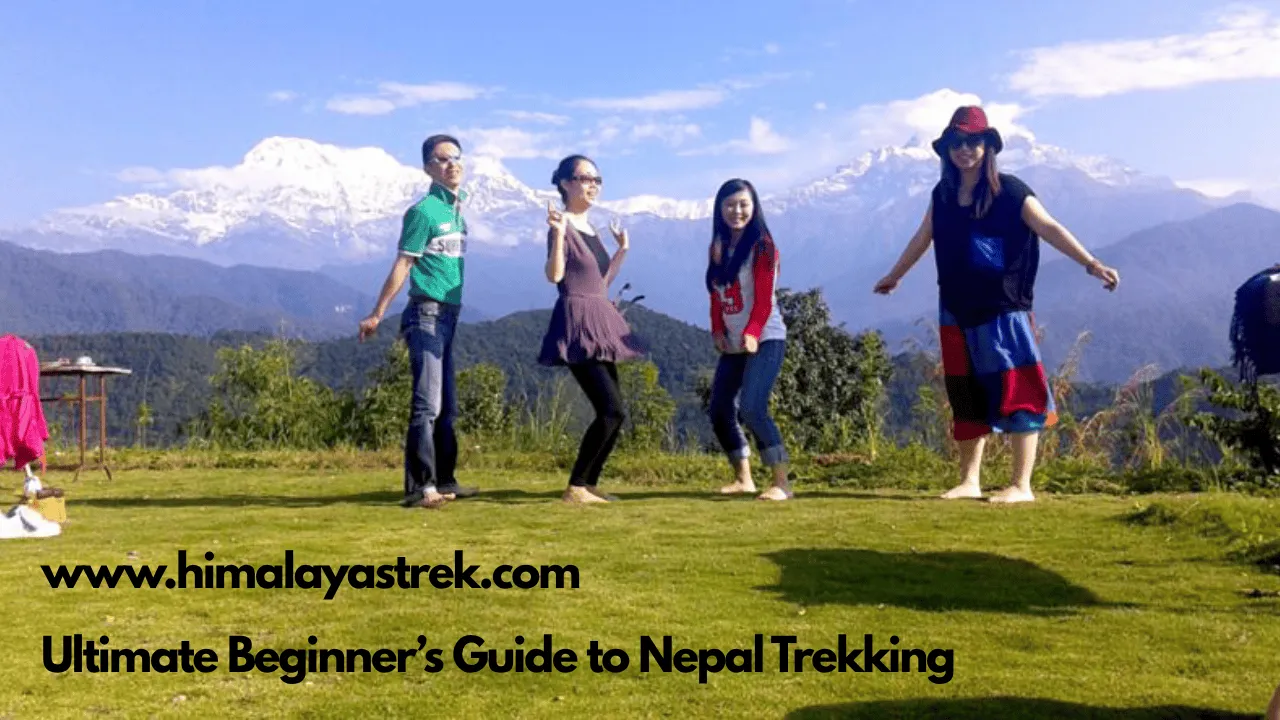
The outdoor experience begins at 4,000 meters, and the atmosphere makes breathing feel restricted while your body remains surprisingly energetic. The mountain range stands as a solid barrier stretching toward the blue sky above the Himalayas. The statement "I didn't expect to feel this small or this free" describes the experience that first-time trekkers undergo at that particular moment.
The ultimate beginner's guide to Nepal trekking provides all essential information without presenting unnecessary material that users should have discovered before their midnight Google searches. The entire text must be read because it contains information that will help you avoid expenses, altitude sickness, and one painful blister.
Why Choose Nepal Trekking Over Every Other Adventure?
Nepal trekking attracts more than 150,000 trekkers annually because its visitor count keeps increasing. The reason behind this phenomenon exists because no other location on earth provides such a high concentration of benefits within a short distance. You can reach a teahouse at 3000 meters' elevation in three days after arriving in Kathmandu. There you will dine on dal bhat under lamplight while eight of the world's fourteen 8000-meter peaks stand visible on the horizon.
The trekking routes of Nepal offer special advantages to first-time hikers. The teahouse trail network allows hikers to travel without needing to transport camping equipment. The guided packages provide all necessary permits and logistical support and require acclimatization scheduling. The local culture, which includes Buddhist monasteries, Sherpa villages, and mani stone walls, provides travelers with new experiences during their daily walking adventures. The 14-day Annapurna Circuit offers an unbelievable value because its total cost matches less than what skiers spend for two days at Alpine resorts.
How Is Nepal Trekking, Really? (The Honest Overview)
The Nepal trekking experience does not resemble a simple outdoor nature walk. The trails serve as authentic mountain trails that present various obstacles, including rocky sections, muddy areas, and a suspension bridge that creates fear of falling. The activity requires special equipment because it falls between basic climbing and advanced mountaineering. The classic beginner routes require no special equipment because users do not need crampons, ice axes, or ropes.
A typical trekking day starts at dawn. The breakfast consists of porridge or toast, which is served with Tibetan butter tea that people need to learn to appreciate because it tastes salty instead of sweet. The trekker walks for four to seven hours, which includes a lunch break that takes place during the trekking time. The afternoon period serves as a time for trekkers to rest while they adapt to the high altitude and have meaningful discussions with other trekkers who come from various countries. The teahouse evening atmosphere combines warmth with simplicity while patrons experience unexpected social interactions. The Wi-Fi connection functions poorly, but everything else in life remains perfect.
Popular beginner routes at a glance:
Everest Base Camp (EBC) requires 12 to 14 days to reach its highest point of 5364 meters, which makes it an important landmark. Annapurna Base Camp (ABC) requires 7 to 10 days to reach its highest point of 4130 meters, which makes it a less challenging trek. Langtang Valley requires 7 to 10 days for exploration, which offers visitors a less busy atmosphere and a chance to see traditional local customs. Ghorepani Poon Hill offers a 4 to 5-day trek, which serves as an ideal introductory hike because it provides breathtaking sunrise views.
When to Do This Trek: Best & Worst Seasons Explained
The most crucial factor for Nepal trekking visitors to consider is their choice of time for the trek. The four seasons of Nepal bring completely different trail experiences to hikers.
- The interim period from September to November marks the beginning of the autumn season. The period from September to November experiences its highest activity level during this time.
- The period from March to May marks the beginning of the spring season. The second most attractive time of year occurs when rhododendrons bloom during warm days.
- The period from December to February establishes winter season boundaries. The period experiences clear daytime skies, and temperatures drop during nighttime. The mountain routes that operate at high altitudes may experience temporary closures.
- The monsoon period from June to August brings heavy rain, leeches, and landslide danger. The activity requires advanced skills and should be avoided by newcomers.
Nepal Trekking Guide for First-Time Trekkers
The guidebook supports people who lack any experience trekking through altitudes exceeding 3000 meters. You may be either a weekend hiker, a gym regular, or a person who became enamored with an Everest photograph and decided to visit the area. You are welcome here. The trekking routes of Nepal were established to match your abilities. The existing routes that people walk today developed from ancient trade and pilgrimage paths that Nepali communities have used throughout history. The paths receive daily use from people who are starting to learn about hiking.
You do not need to be an athlete. The requirements do not include any previous experience with climbing activities. You need a reasonable base of cardiovascular fitness, the right information, a spirit of patience, and this guide. Let's get into it.
What Scares Beginners Most — and Why It Shouldn't
People find value in fear because it helps them to become better prepared for upcoming challenges. The common fears that beginners have about trekking in Nepal need to be addressed because they either exist at an exaggerated level or can be easily solved. The three major anxieties exist, but the facts about each one can be found in the following section.
Fear 1: Altitude Sickness
The condition known as acute mountain sickness (AMS) exists as a genuine medical problem that causes most trekkers to return from their journey. The symptoms of the condition include headache, nausea, dizziness, and fatigue, which together create the experience of the worst hangover that exists at high altitudes. The cause of the problem arises when people ascend to high altitudes without giving their bodies sufficient time to adapt to decreased oxygen levels.
Most Common Problem: The most frequent issue that people face. The proper method for acclimatization requires climbers to ascend during daylight hours and return to lower altitudes for their nighttime rest. People should limit their nighttime altitude gain to 300 to 500 meters when they are at elevations above 3000 meters. People should not disregard their body signals because these need immediate attention. People should descend to lower altitudes when their health condition worsens.
Fear 2: Physical Fitness Demands
The majority of beginner routes become accessible to all people who practice regular exercise, which includes walking for 30 minutes three times each week. The trails require continuous movement because they need extended periods of time to be completed. The Nepali trekking culture uses the phrase "bistari bistari," which means to walk slowly. The guides repeat this phrase because they consider it to be their most important message. The mountain rewards people who display patience instead of those who try to reach the summit quickly.
Fear 3: Getting Lost or Being Unsafe
The primary trekking paths of Nepal, which include Everest, Annapurna, and Langtang, provide clear trails that are used by many trekkers who can find teahouses throughout their journey. You will not be alone in the wilderness. First-time visitors can achieve complete safety through two methods, which include hiring a licensed guide or joining a secure package tour. Nepal's Tourism Board maintains a register of licensed guides—always check credentials.
7 Mistakes Every Beginner Makes (and How to Avoid Them)
01: Rushing the Ascent
The first section of this document shows that adding extra acclimatization days to your schedule brings no benefit until you develop AMS, which forces you to descend. You should include buffer days in your travel plans.
02: Packing Too Heavy
The weight of your backpack increases your happiness loss because every additional kilogram creates more weight. Most teahouses provide blankets and basic toiletries. You should bring 10 days' worth of supplies, which should not exceed 10 kilograms.
03: Skipping Travel Insurance
The cost of EBC helicopter rescue operations ranges between 3000 to 5000 US dollars. High-altitude trekking insurance costs 80 USD. Do the maths.
04: Ignoring Hydration
The water requirement for your body is 3 to 4 liters per day, which you must meet even when you do not experience thirst.
05: Wearing the Wrong Footwear
The use of new boots during the first day of a two-week hike creates conditions that lead to blisters. The process of breaking in boots needs a duration of 6 to 8 weeks before you begin your trip.
06: Not Budgeting for Tips
The practice of tipping guides and porters serves as an essential requirement that sustains their ability to work. You should plan to spend between $5 and $10 for each guide whom you hire on a daily basis.
07: Underestimating Cold Nights
The temperature during nighttime at 4,000 meters' elevation may reach minus 10 degrees Celsius in October. You must bring both a sleeping bag liner and thermal base layers because they are needed throughout the entire year.
Essential Gear & Packing List for Nepal Trekking
People can spend less money by not needing to purchase high-priced equipment or buy every item that exists in an entire retail establishment. The value of a basic lightweight kit exceeds that of expensive equipment that you cannot operate. The packing list shows essential items that all first-time trekkers need to bring when they visit Nepal.
|
Category |
Item |
Notes |
|---|---|---|
|
Footwear |
Waterproof hiking boots |
Worn in, ankle support essential |
|
Footwear |
Trekking sandals / camp shoes |
Relief for evenings at teahouse |
|
Clothing |
Moisture-wicking base layers (×3) |
Merino wool preferred |
|
Clothing |
Insulating mid-layer (fleece/down) |
Down jacket for above 3,500 m |
|
Clothing |
Waterproof shell jacket & trousers |
Non-negotiable in Nepal |
|
Clothing |
Warm hat, gloves, sun hat |
All three, different elevations |
|
Navigation |
Offline maps (Maps.me / Gaia GPS) |
Download before departing Kathmandu |
|
Health |
First-aid kit + Diamox |
Consult GP before carrying Diamox |
|
Health |
Water purification tablets / filter |
Always treat trail water |
|
Accessories |
Trekking poles |
Protect knees on descents |
|
Accessories |
Headlamp + spare batteries |
Teahouse power is unreliable |
|
Accessories |
Sleeping bag liner |
Extra warmth at no extra bulk |
Permits, Legalities & Paperwork — Know Before You Go
The regulation of trekking activities in Nepal provides environmental protection and community protection. The penalties for lacking proper permits lead to three possible outcomes, which include financial charges and required descent and checkpoint turnbacks. Timetable of basic needs for newcomers:
TIMS Card (Trekkers' Information Management System) is required for almost all trekking areas, costs approximately $20 USD for individual trekkers or $10 if booked through a registered agency. The ACAP and SAGARMATHA Permit requires separate permits, which cost between $30 and $35 USD for the Annapurna Conservation Area and Sagarmatha (Everest) National Park. Both permits can be obtained at the Nepal Tourism Board office in Kathmandu or through your certified trekking company.
Honest Advice: The necessary trekking permits must be obtained through government-approved trekking agencies. The guide who accompanies you will possess a license that provides access to emergency evacuation services and all official emergency support. The registration can be verified at the Nepal Tourism Board and Trekking Agent Association (TAAN)
How Much Does Nepal Trekking Actually Cost?
The trekking experience in Nepal stands as the most budget-friendly adventure travel option found worldwide. The following cost breakdown provides actual expenses for an EBC trek, which lasts 14 days and excludes international flight costs.
Teahouse Accommodation
Teahouse Accommodation costs between $5 and $15 per night to stay. You can dine at the teahouse for both dinner and breakfast to receive either free food or very low-cost meals, which you should choose because it helps local business owners.
Food on Trail
Food on the trail costs between $15 and $25 USD per day, which includes all meals and hot drinks. The price of dal bhat increases with elevation because its cost at 5,000 meters exceeds its cost at 3,000 meters.
Guide & Porter
The service costs $25 to $35 per day to hire a guide and $15 to $20 to hire a porter. The services provided to us proved exceptionally valuable because the team members carried our equipment while they identified dangerous situations and shared their cultural knowledge.
Total Budget Range
The total budget range covers all expenses for a 14-day EBC trekking package, which includes a guide but does not include airfare. The luxury options start at $3,500 for private lodge accommodations.
Research-Backed Tips for Smarter Nepal Trekking
Great Nepal trekking preparation combines internet research with advice from people who have actually done the trails. The tips that follow serve as the main distinction between first-time trekkers who show confidence and those who experience anxiety.
Training & Physical Preparation
You must begin your training program for at least 12 weeks before your scheduled departure time. Your training program requires you to practice long-distance walking through 10 to 20-kilometer weekend hikes, which include carrying a loaded backpack. You should perform stair climbing exercises because they provide the best city-based altitude simulation, and you need to complete cardiovascular work three times each week. Your training program does not include speed development because you focus on building endurance and improving recovery abilities.
Training Benchmark
You need to walk uphill for 5 hours without taking breaks while carrying a 7 kg pack to prove your readiness for Poon Hill. You need to complete that task for two consecutive days to demonstrate your readiness for Annapurna Base Camp. To prepare for EBC, you need to complete one month of consistent training before starting your training program.
Nutrition on the Trail
Your body burns significantly more calories at altitude. You should consume large amounts of food because your appetite will reduce, which is another symptom of AMS. Dal bhat, which consists of lentil soup with rice and vegetables and pickles, serves as both the national dish and the best companion for trekkers. The restaurant offers free refills when you order the same item two times.
A Moment That Stays: Sunrise at Poon Hill
The alarm goes off at 4 a.m. The teahouse exists in darkness while the air produces a sharpness that can sting. You put on all your clothing to walk uphill in the dark while your headlamp illuminates the path, and you move through sleep while you think about your choices. The horizon begins with an amber color, which changes into a gold shade and finally reaches a color that no human language has given a name. The three mountains Dhaulagiri, Annapurna South, and Machapuchare, the Fish Tail Mountain, rise above a cloud sea which resembles ancient islands. You share complete silence with twenty other trekkers who stand next to you. Some people take photographs while others stay in the same position.
Nepal trekking requires people to experience. The discomfort exists as a genuine experience because the actual benefits show themselves. The decision to go outside brings no regret to people. The majority of people experience regret because they did not travel earlier.
How to Know Your Source Is Trustworthy
The Nepal trekking guidelines present themselves as different from other "Top 10 Nepal Tips" list articles because they provide precise information that comes from reliable sources, while they show their complete operational boundaries. The best guidebooks exist, which certified trek leaders wrote and which wilderness medicine experts evaluated and which their authors maintain through annual updates. The Nepal Tourism Board (ntb.gov.np) and the Himalayan Rescue Association (himrescue.org) are the two most authoritative sources on safety and permit information.
The guide protects both your safety and your financial resources instead of presenting the trek as an Instagram advertisement. Nepal trekking provides an exceptional experience that requires physical effort. Both things are true, and you deserve to know both before you go.
Ready to Take Your First Step?
Your first opportunity to begin planning your Nepal trekking adventure occurred six months ago. The present moment serves as the second-best time to start your plans.
Plan Your Trek → Get a Free Quote - info@himalayastrek.com

.png "NTB")
.png "Pata")